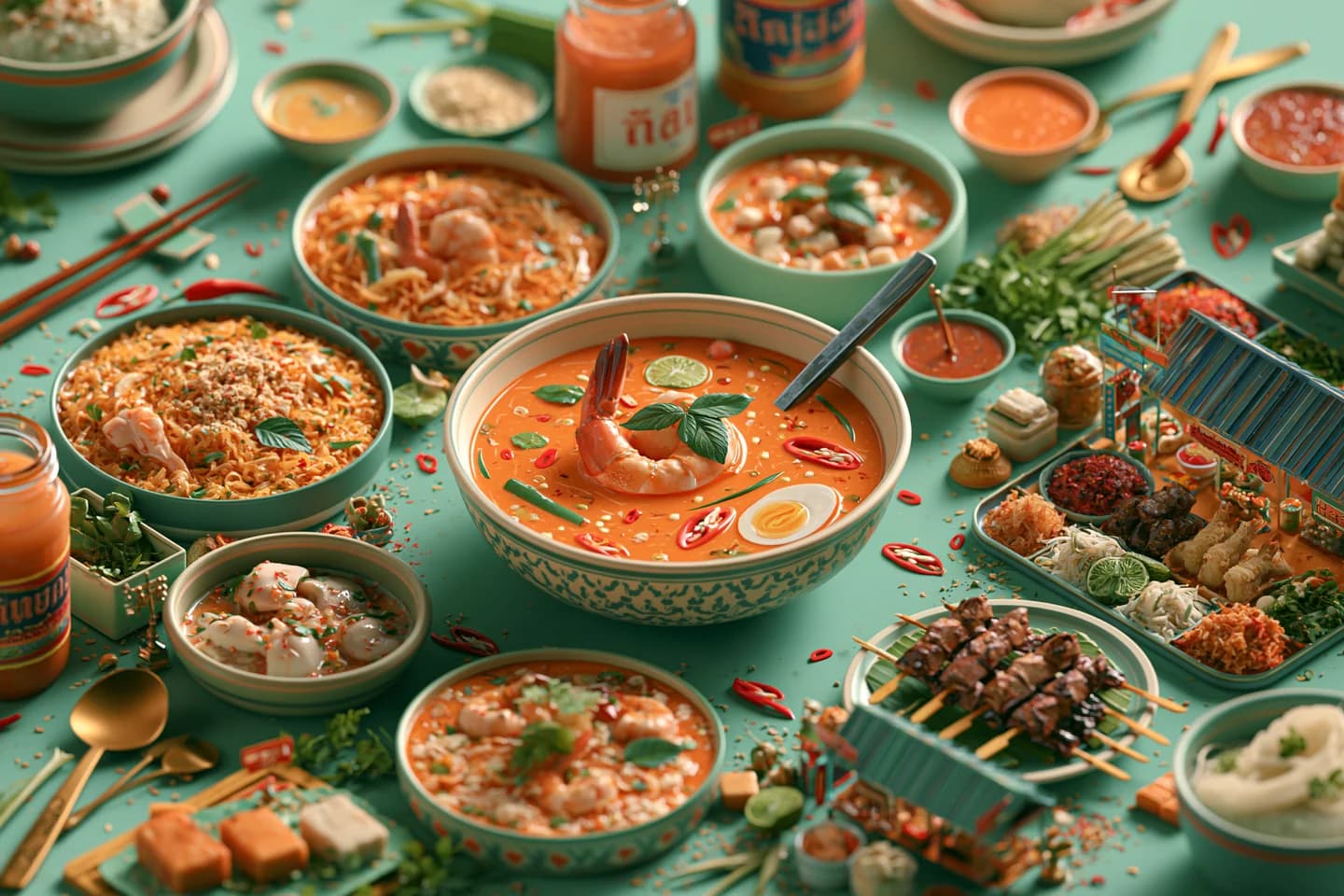
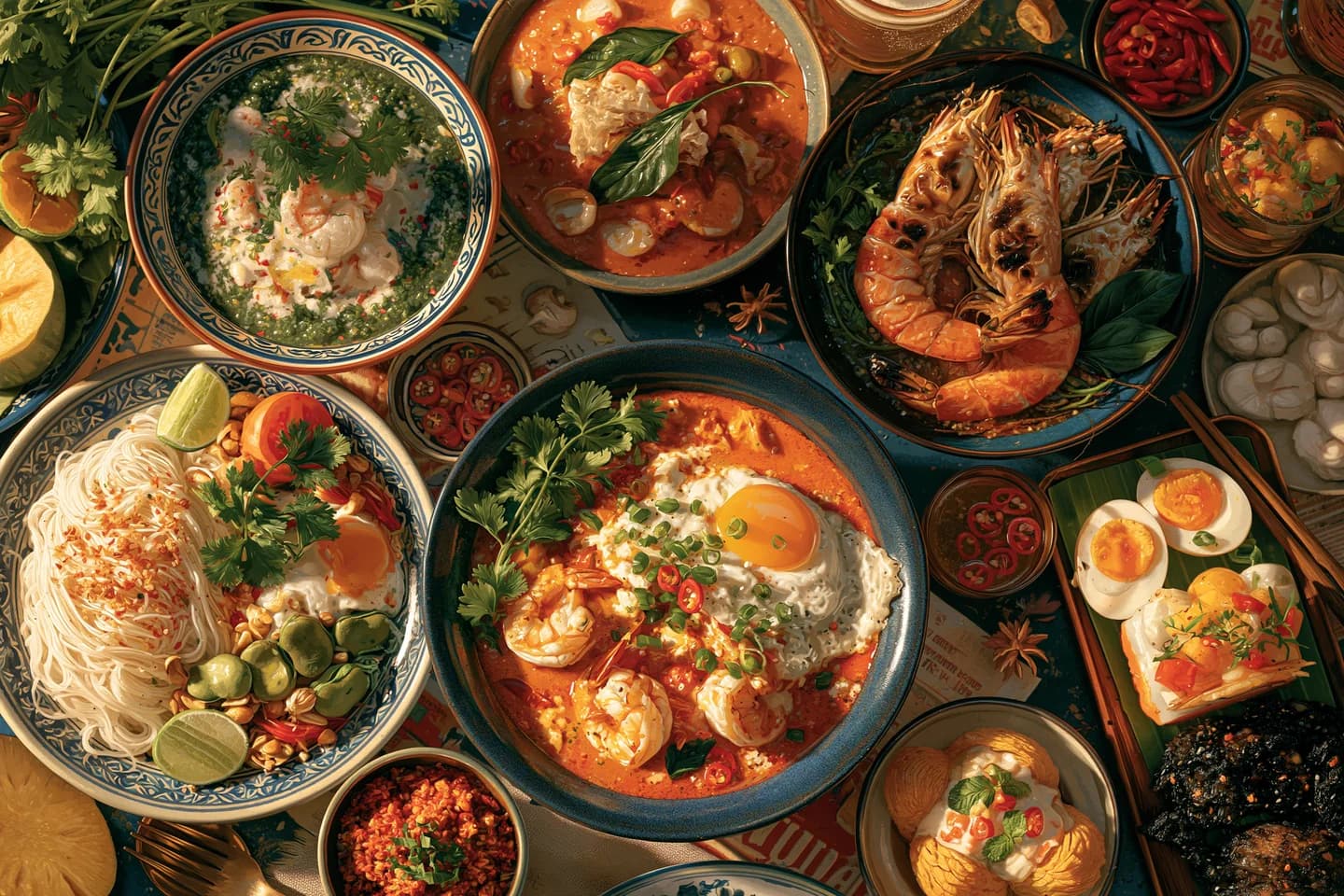
Five useful Thai dishes to start with are pad Thai, tom yum goong, som tam, massaman curry and pad krapao. They introduce different textures and cooking methods: soft noodles, fragrant broth, crisp salad, slow-cooked curry and a quick basil stir-fry.
Treat this selection as a tasting route, rather than a ranking. A dish you love at one stall may taste different at another because of the ingredients, regional style and cook. Thai food also includes many more traditions than five familiar names can represent.
Pad Thai: tamarind, rice noodles and a little crunch
ผัดไทย — pad Thai is a stir-fried rice-noodle dish whose sauce often combines tamarind, a sweetener and fish sauce. Egg, tofu, bean sprouts and garlic chives are common additions; shrimp and dried shrimp appear in many versions. Crushed peanuts and lime may arrive on the side.
Look for the contrast between the soft noodles and the fresh crunch of the vegetables. Taste before adding every condiment. A squeeze of lime changes the balance differently from a spoonful of chilli.
Pad Thai works well as a meal by itself. If you prefer noodles with a sharper sour note, ask about the house style rather than expecting every plate to match a version you ate abroad. A tofu option still needs an ingredient check if you avoid seafood.
Tom yum goong: a soup built around aroma
ต้มยำกุ้ง — tom yum goong is a hot-and-sour shrimp soup, typically scented with lemongrass, galangal and makrut lime leaves. Lime juice supplies sourness, while chilli adds heat. Mushrooms are a familiar addition.
You may encounter a clear broth, น้ำใส, or a richer version, น้ำข้น. The richer style can contain evaporated milk and chilli paste; the name alone does not establish a dairy-free recipe. Large pieces of aromatic herbs may be left in the bowl to flavour it and are often set aside while eating.
Choose this dish when you want a fragrant, sour contrast to rice and another shared dish. Check the serving size: a soup intended for the table is a different order from a single bowl for lunch.
Som tam: green papaya with a crisp bite
ส้มตำ — som tam uses shredded unripe papaya, which is firm and crisp rather than sweet like ripe papaya. The ingredients are pounded and mixed in a mortar, allowing the dressing to coat the strands without turning them into a smooth paste.
A familiar version, som tam Thai, often includes lime, fish sauce, tomatoes, long beans, peanuts and dried shrimp. Other versions may contain salted crab or fermented fish. The different names matter: they describe changes in flavour and ingredients, not simply the same salad at different heat levels.
Sticky rice and grilled chicken are common companions. Ask which version the stall makes before ordering, particularly if you are expecting the peanut-and-lime style. For a shared meal, its crunch creates a useful contrast with softer dishes.
Massaman: coconut curry with warming spices
แกงมัสมั่น — massaman curry often combines coconut milk, potatoes, onions and peanuts with meat such as chicken or beef. The paste and whole spices can bring aromas associated with cinnamon, cardamom and other warming spices.
It is frequently gentler in chilli heat than some Thai curries, but “mild” is a comparison, not a recipe specification. Chilli may already be part of the paste. A kitchen cannot necessarily remove it from a finished batch.
Order rice alongside unless the menu says it is included. This is a good choice when you want a substantial meal with soft ingredients and a rich sauce. The potatoes do not make rice redundant; they contribute a different texture.
Pad krapao: holy basil and a fast stir-fry
ผัดกะเพรา — pad krapao combines holy basil with ingredients such as pork, chicken or seafood, usually stir-fried with garlic, chilli and seasonings. Holy basil gives the dish its distinctive character; it is different from the sweet Thai basil used in some other dishes.
A common serving is over rice, with a fried egg available as an addition. Check whether the menu lists the stir-fry as a separate shared dish or a rice plate. The egg is not automatically included everywhere.
This is a useful everyday lunch choice when you want savoury, aromatic food without a long sequence of courses. The exact protein, sauce and heat still depend on the cook.
Put together a meal with contrast
| If you want… | Start with… | Notice… |
|---|---|---|
| A noodle meal | Pad Thai | Tamarind against sweet and salty flavours |
| A fragrant soup to share | Tom yum goong | Sour broth and aromatic herbs |
| Something crisp | Som tam | Papaya texture and the particular dressing |
| A rich curry with rice | Massaman | Warming spices and soft potatoes |
| A quick rice plate | Pad krapao | Holy basil, garlic and the chosen protein |
You do not need to order all five. For two people, a rice dish and a contrasting soup or salad may be a more manageable introduction; portion sizes vary.
For the next step, use the practical Thai food guide to understand menu words, ask about ingredients and explain preferences. It separates choosing a dish from confirming how a particular kitchen prepares it.
Common questions
Which of these Thai dishes is usually a gentler starting point?
Pad Thai is often served with chilli separately, and massaman commonly has a gentler heat than some other curries. Recipes vary, so ask the cook rather than treating a dish name as a promise about spice.
Does tom yum goong always contain coconut milk?
No. Tom yum goong can have a clear or richer broth, and recipes differ. The richer version may use evaporated milk and chilli paste; do not assume coconut milk is a required ingredient.
Are pad Thai and papaya salad vegetarian?
Not automatically. Pad Thai may include fish sauce or dried shrimp, and papaya salad dressings may contain fish sauce or other seafood ingredients. Ask about the complete recipe.
Behind ThaiWith.Me
Fern is a native Thai speaker from Chiang Mai and has been teaching since 2019. Her lessons connect practical language with everyday cultural context.
Meet your Thai tutor