
For a considerate visit in Thailand, pay attention to the place you are entering and the people hosting you. Clothing, shoes, photographs and the way you share a table often matter more than memorising an elaborate list of gestures.
Practices vary between households, communities and religious sites. The guidance below gives you something useful to notice; the instructions of your host or the site take priority over a general description.
Before entering a temple
Check the specific temple's visitor information. Covering shoulders and knees is a sensible starting point, and some prominent sites apply more detailed clothing rules. Keep a suitable layer accessible rather than buried at the bottom of your luggage.
Look for the boundary where shoes should be removed. It may apply to a particular building rather than the whole complex. Avoid blocking the entrance while adjusting footwear, and use the storage area if one is provided.
A temple can be an active place of worship even when it also welcomes sightseeing. Lower your voice near prayer, give people space and follow restrictions around ceremonies or closed areas. If a location does not permit entry, a quiet doorway photo is not an exception.
Sit, move and photograph with attention
When seated near a Buddha image, avoid directing the soles of your feet towards it. Watch how people are sitting and choose a comfortable position that respects the setting. If mobility makes a position difficult, ask staff about an alternative.
Do not climb religious images or historic structures for a photograph. A site may allow general photography while restricting it in particular rooms, during worship or around specific objects.
Ask before making a person the main subject of a close-up photo. ถ่ายรูปได้ไหม, “May I take a photo?”, can help when combined with a clear gesture towards what you want to photograph. A refusal should end the request. Permission to enter a place does not automatically include permission to photograph everyone inside.
Etiquette around monks and offerings can have additional expectations. Follow temple staff or your host rather than improvising physical contact or handing over an object in an unfamiliar way.
Follow your host at the entrance to a home
Pause when you arrive. Notice where shoes are placed and ask if you should remove yours. Do the same at a small guesthouse, shop or other space when the entrance suggests a footwear boundary.
Avoid touching someone's head, including a child's, without permission. Do not use a foot to point at an object or move another person's belongings. If you need to pass someone seated on the floor, acknowledge them and leave enough space rather than stepping over them casually.
If a host invites you to eat or sit, ask where you should go instead of assuming every chair or room is available. You do not need a complicated performance; a little attention to the household's routine communicates respect.
Treat a shared meal as a shared space
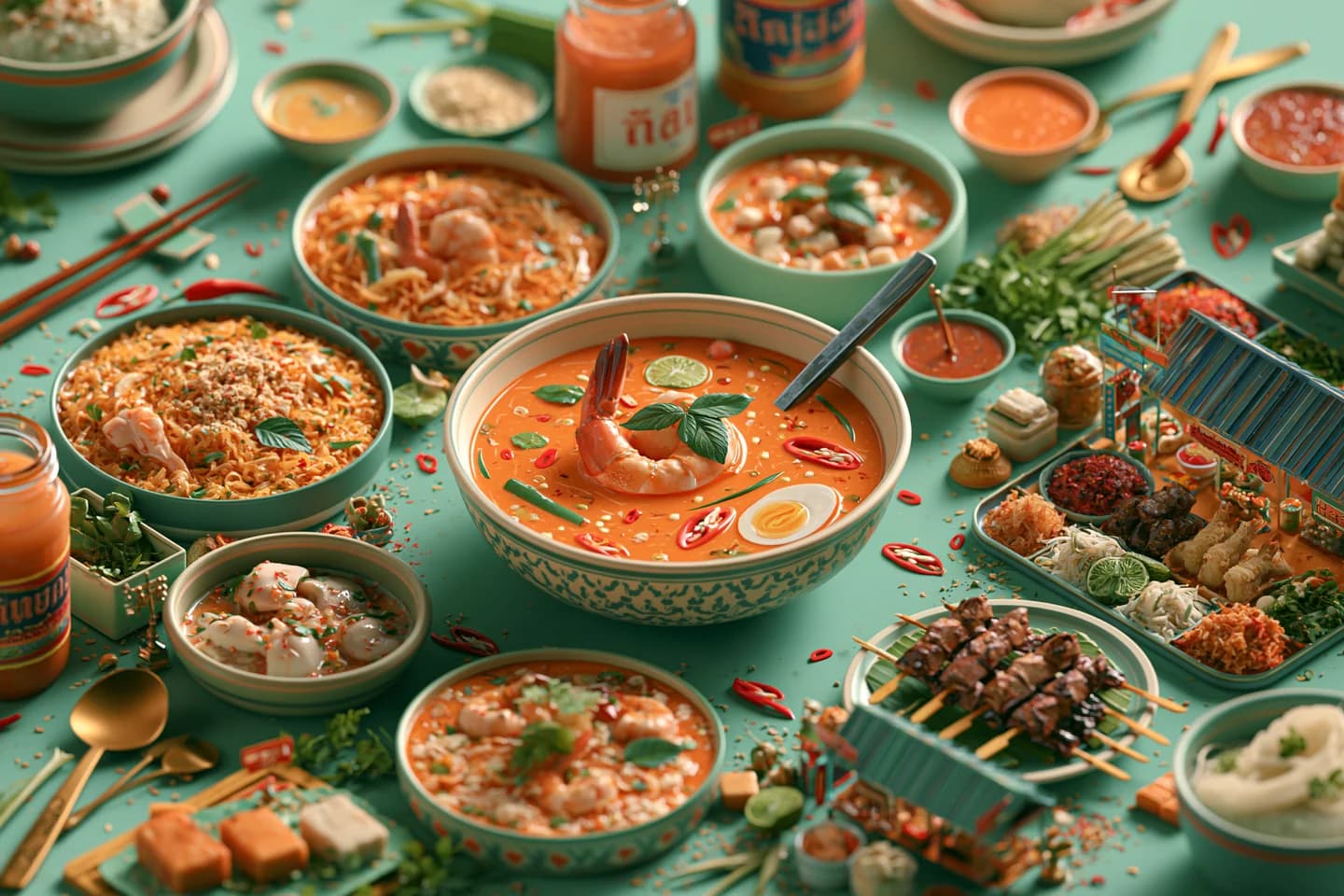
For many rice dishes, a spoon and fork are common. The fork can help move food onto the spoon. Chopsticks are often used for noodles, but they are not the default utensil for every meal.
When dishes are shared, use the serving spoon if one is provided and take a manageable portion. Leave room for others to try the food. Ask how an unfamiliar dish is eaten, particularly if it arrives with separate vegetables, sauces or wrappers.
Explain dietary requirements early enough for the host to make choices. A respectful refusal is clearer than accepting food you cannot eat and trying to remove ingredients afterwards. The practical food guide includes vocabulary for ingredient questions.
Keep requests and disagreements calm
If an order, price or direction is unclear, begin with the specific detail. Show the receipt, repeat the amount or point to the booking date. Increasing your volume does not resolve a language mismatch.
Bargaining depends on the business. A posted fixed-price menu differs from a market stall where negotiation may be expected. Ask politely if unsure and decide whether the offer works for you without making the exchange a contest.
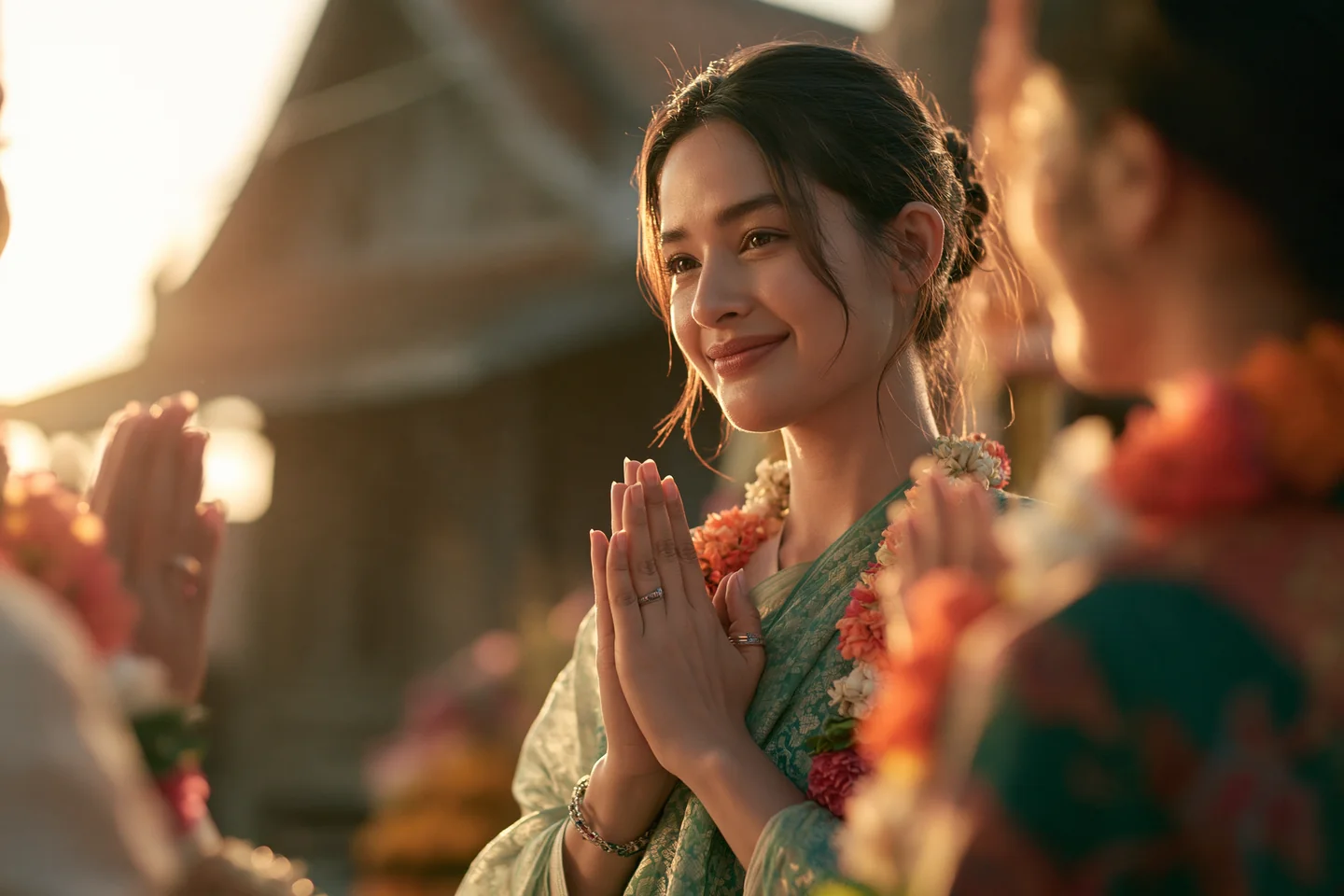
Greetings also depend on context. You do not need to wai every person you pass. The hello and wai lesson concentrates on that first exchange and the role of polite particles.
Recover from a small mistake simply
If someone points out a rule you missed, stop the action, acknowledge them and adjust. ขอโทษ, “sorry” or “excuse me”, is useful when an apology is appropriate.
Avoid turning a correction into a long explanation that keeps everyone waiting. Put the shoes in the right place, move out of the restricted area or put the camera away. Then continue the visit with what you have learnt.
The most useful habit is to observe before acting in an unfamiliar space. It gives you time to notice both the common practice and the particular preferences of the people in front of you.
Common questions
What should I wear when visiting a Thai temple?
Clothing covering shoulders and knees is a useful starting point, but particular sites may have stricter requirements. Check the site's guidance and follow staff instructions about clothing, footwear and access.
Should I remove my shoes in a Thai home?
Observe the entrance and ask your host. Shoes are commonly removed before entering homes and some other spaces, but the boundary and any exceptions are for your host to explain.
Are chopsticks used for every Thai meal?
No. A spoon and fork are common for many rice dishes, while chopsticks are often provided for noodles and some other foods. Follow the setting and use the utensils provided.
Behind ThaiWith.Me
Fern is a native Thai speaker from Chiang Mai and has been teaching since 2019. Her lessons connect practical language with everyday cultural context.
Meet your Thai tutor