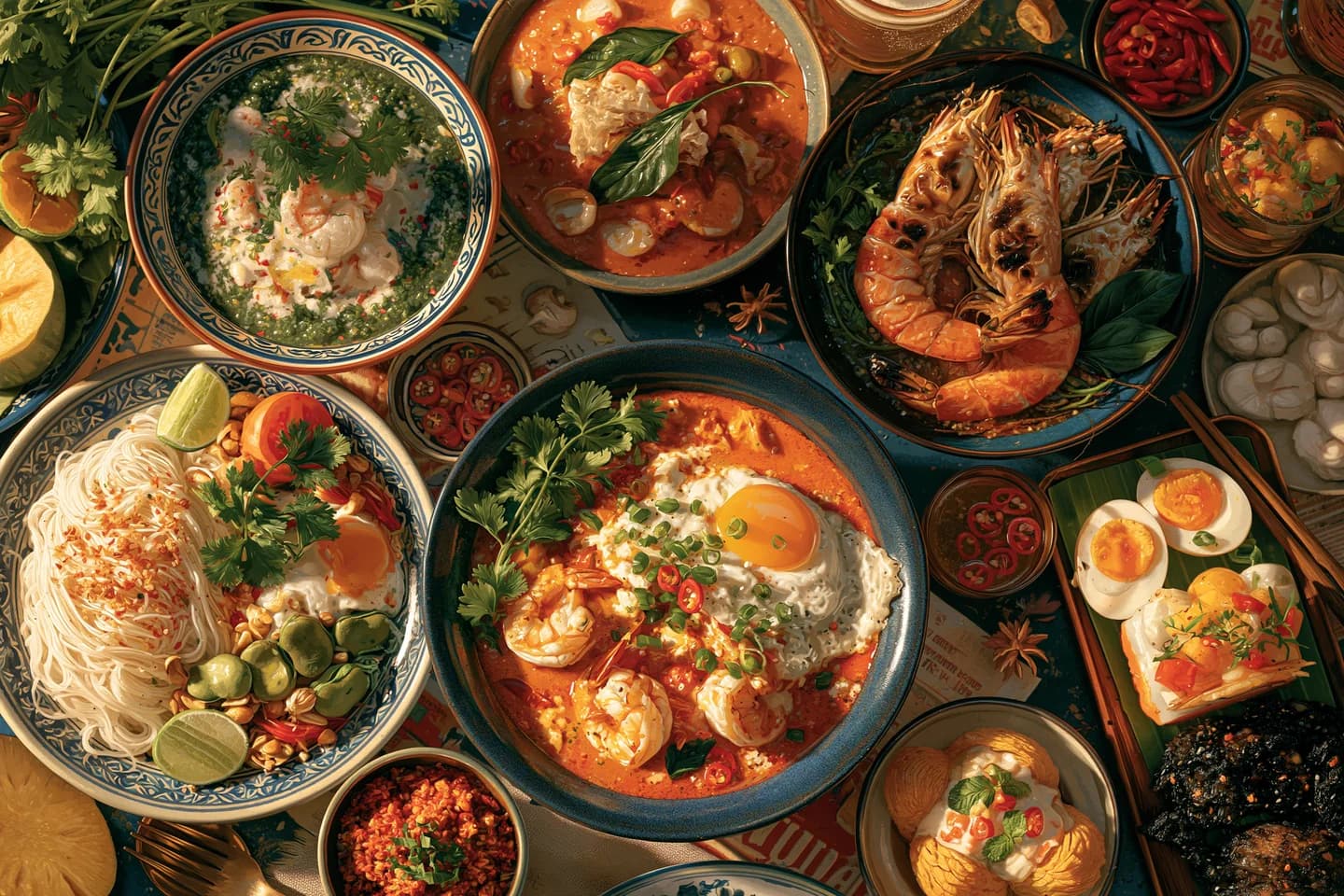
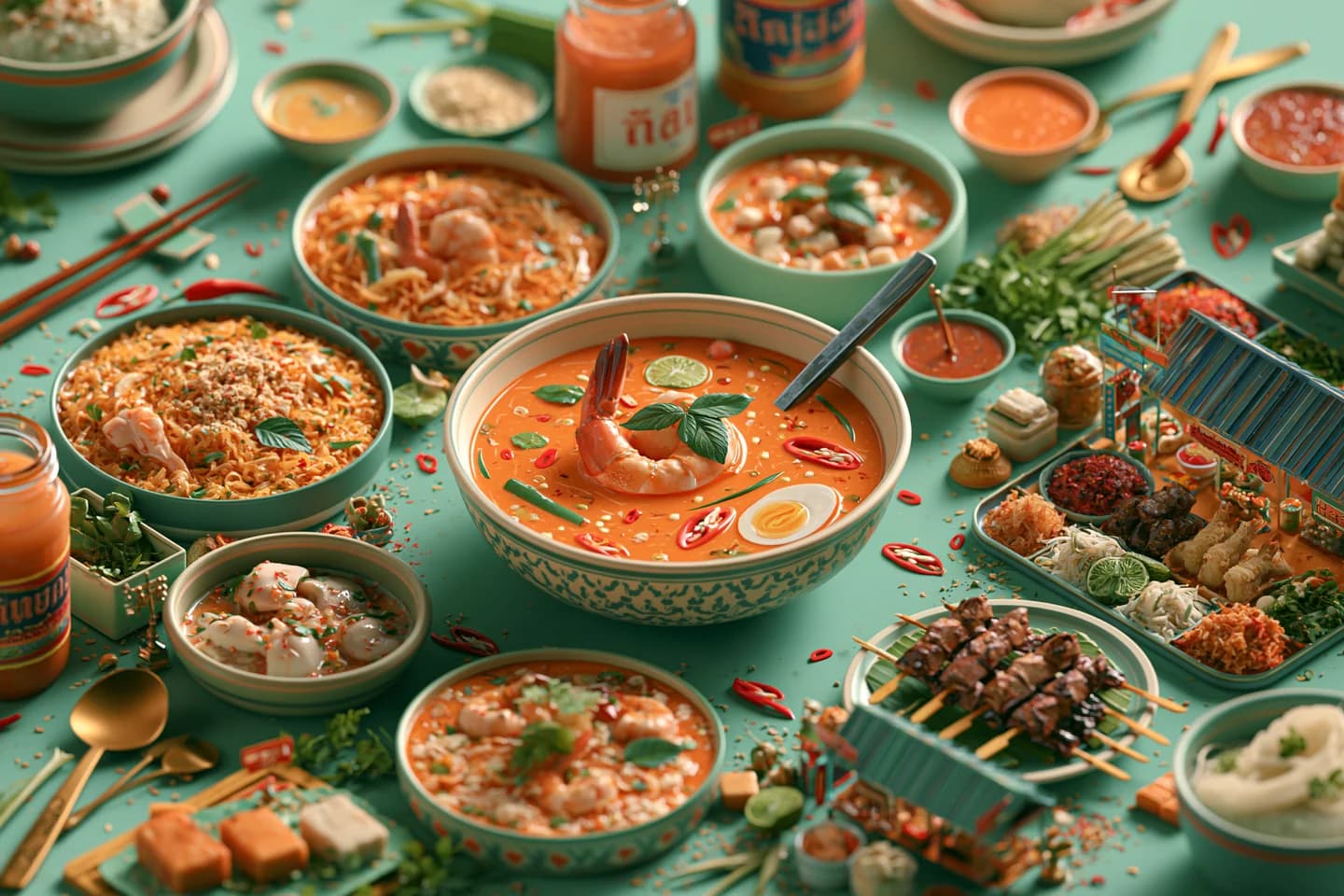
A Thai menu becomes easier to use when you recognise cooking words, main ingredients and serving styles. You do not need to translate every line. Identify a dish, check whether it comes with rice or needs ordering separately, then explain any preferences before the food is prepared.
For help choosing flavours, read the five Thai foods to try. This guide concentrates on the practical conversation between choosing something and paying for it.
Recognise the cooking word
Many dish names give an early clue about preparation. The pronunciation column is approximate and leaves out detailed tone notation; use it alongside a spoken example.
| Thai | Approximate sound | Menu clue |
|---|---|---|
| ผัด | phat | Stir-fried |
| ต้ม | tom | Boiled; used in many soup names |
| ทอด | thot | Fried |
| ย่าง | yaang | Grilled |
| แกง | kaeng | Curry or a category of soup |
| ยำ | yam | A seasoned, often sour and spicy salad |
| ข้าว | khaao | Rice |
| ก๋วยเตี๋ยว | kuai tiao | Noodles or a noodle dish |
These are clues, not complete recipes. A word translated as “salad” can describe a warm dish, and แกง does not automatically mean a thick coconut curry. Read the rest of the name or ask what is included.
Check the protein and the serving style
Common ingredient words include ไก่, chicken; หมู, pork; เนื้อ, meat and often beef in menu context; ปลา, fish; and กุ้ง, shrimp. A stall may offer the same cooking style with several options.
ราดข้าว indicates food served over rice, while กับข้าว refers to dishes eaten with rice. If you order a dish for the table, check whether rice needs a separate order and whether the portion is intended for sharing.
For noodles, you may need to choose a type of noodle and a soup or dry preparation. A picture or menu entry can establish the starting order; the vendor's follow-up questions tell you which choices remain.
Make one clear request at a time
ขออันนี้ — kho an nii means “This one, please.” Point to one item while speaking, then state the quantity or preference. If several people are ordering, let each order be confirmed before changing another detail.
For plain drinking water, ขอน้ำเปล่า — kho naam plao is a useful request. A polite ending such as ครับ or ค่ะ can accompany it. The coffee lesson develops a complete drink order with its quantity and preferences.
Listen for the server to repeat the order. Confirm that a modification applies to the correct dish, especially when the table includes several similar plates.
Separate spice preferences from ingredients already in the dish
ไม่เผ็ด means “not spicy”. เผ็ดน้อย asks for a lower level of heat. ไม่ใส่พริก asks for no added chilli.
A cook making an individual stir-fry may have different options from someone serving a curry prepared earlier. Chilli can already be in the paste or sauce. Ask whether the dish can be made the way you need, rather than assuming a request removes every source of heat.
There is no universal restaurant scale for “a little spicy”. If your preference is important, be explicit and choose a preparation the kitchen can explain.
Name dietary restrictions precisely
A vegetable or tofu dish may contain fish sauce, oyster sauce, shrimp paste, stock or egg. A label that appears suitable is a starting point for a question about the recipe.
| Ingredient to clarify | Thai |
|---|---|
| Fish sauce | น้ำปลา |
| Oyster sauce | น้ำมันหอย |
| Shrimp paste | กะปิ |
| Peanuts | ถั่วลิสง |
| Milk | นม |
| Egg | ไข่ |
For an allergy, carry a checked explanation in Thai that identifies the allergen and relevant cross-contact concerns. Removing a garnish does not establish that the sauce, oil or utensils are suitable. Ask staff about the actual preparation; when they cannot confirm it, choose a meal whose ingredients and handling can be clarified.
For general food-handling considerations, look for appropriate storage, clean preparation and food cooked thoroughly. A queue suggests popularity, not a guarantee of safety. Official CDC travel-health guidance offers broader preparation advice.
Finish the meal and confirm the bill
คิดเงินด้วย — khit ngoen duai is a common way to ask for the bill. Add your usual polite ending. Check whether you pay at the table, at a counter or through the particular food court's system.
Read the total before paying and confirm any item you do not recognise. The numbers lesson helps you hear small amounts, while a calculator or written figure remains useful for checking the complete total.
For your next meal, choose one menu word to recognise and one request to practise. That gives the language a practical use without making every ingredient on the menu a study assignment.
Common questions
What do ผัด, ต้ม and ทอด mean on a Thai menu?
ผัด refers to stir-frying, ต้ม to boiling and many soup preparations, and ทอด to frying. These cooking words help identify the kind of dish, but they do not describe every ingredient.
Does ไม่ใส่พริก guarantee a chilli-free dish?
No. It requests that chilli not be added, but chilli may already be present in a paste, sauce or prepared dish. Ask about the recipe and whether it can be changed.
How should I explain a food allergy in Thailand?
Use a clear, checked Thai explanation naming the specific allergen and the need to avoid cross-contact. Discuss ingredients and equipment with staff. If they cannot confirm the preparation, choose an option where it can be clarified.
Behind ThaiWith.Me
Fern is a native Thai speaker from Chiang Mai and has been teaching since 2019. Her lessons connect practical language with everyday cultural context.
Meet your Thai tutor